Snorkelling gets treated as the consolation prize for people who have not learned to dive. It is not — it is a genuinely good way to see the top few metres of a coastline, it costs almost nothing, and in Lebanon it works well about half the time.
The honest version of the other half is that this coast can be murky, and no amount of enthusiasm changes that.
What actually determines a good day
Rain. This is the whole game. Lebanon's coastal visibility is driven by run-off, and after rain the shallows near the shore are the first thing to go cloudy and among the last to clear.
Time since the last storm. Give it several dry days.
Rock, not sand. Sandy beaches are poor snorkelling anywhere. Everything you want to see lives on structure.
Time of day. Calm mornings, before the onshore wind builds. Surge in the shallows makes snorkelling over rock unpleasant and slightly dangerous.
Sun angle. Mid-morning to early afternoon, when light actually reaches the shallow rock.
Where to go
The Beirut coastline
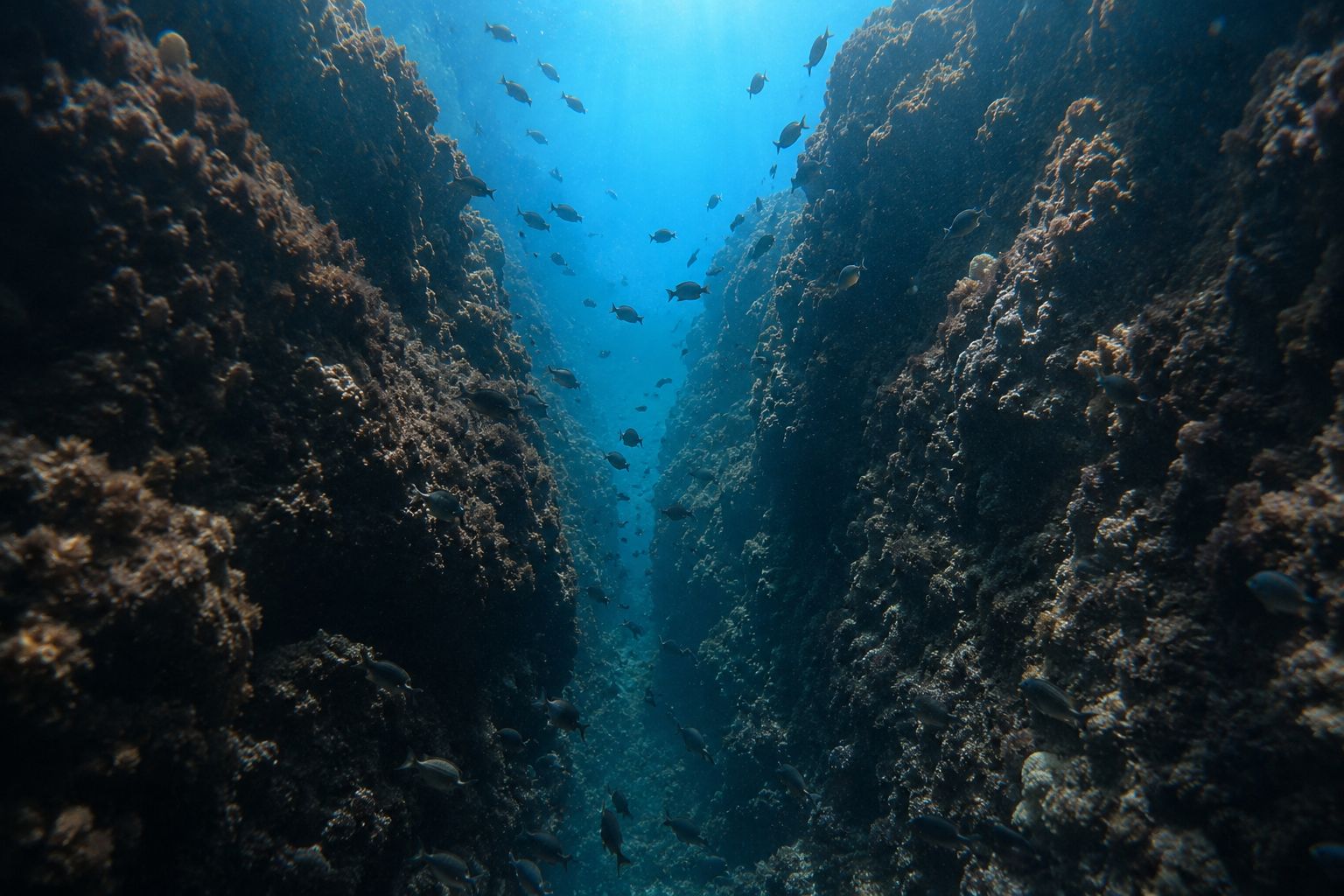
The limestone that makes Raouché famous continues into the shallows — cuts, small overhangs and boulder fields well within snorkelling depth.
Best for: structure and easy access from the city. Worst for: visibility after rain. This is a dense urban coastline.
The deeper version of the same rock is covered in the Riviera caves and Beirut's rock formations.
Jounieh and the bays
Sheltered water, which means it is often snorkellable when more exposed spots are choppy.
Batroun and the north
The clearest water in the country, for the same reason it is the best diving: further from the run-off, less development. Worth the drive on a good day.
Anywhere with rocks
Genuinely. Lebanon's coast is long and much of it is rock. The best snorkelling spot is usually the accessible rocky bit nearest you, on a calm morning after a dry week.
What you will see
Over rock, in clear conditions:
- Damselfish in dark clouds over the structure — the most visible fish in the shallows
- Bream and wrasse, working the rock faces
- Sea urchins, in numbers, in every crevice. Note where they are
- Small blennies and gobies in the holes
- Octopus, if you look at holes rather than open water. Look for scattered shell fragments outside an entrance
- Encrusting growth on shaded rock, which is more colourful than the exposed surfaces
What you will not see: coral gardens, large pelagics, or turtles reliably.
The full species picture, including the invasive Red Sea species now established here, is in what you'll actually see underwater in Lebanon.
Safety on a rocky coast
The real hazards here are not the animals.
Boat traffic. The genuine danger. A snorkeller is nearly invisible from a boat. Use a bright float or buoy anywhere boats operate, stay close to shore, and do not cross channels.
Swell against rock. Being pushed onto limestone is how most snorkelling injuries on this coast actually happen. Get in and out at a sheltered point, watch the swell pattern before committing, and if it is surging, do not.
Sea urchins. Common, and spines break off in the skin. Wear shoes for rocky entries. This is the single most useful piece of advice in this article.
Sun. You are floating face-down in strong sun for an hour. Wear a rash guard or t-shirt — reef-safe sunscreen on your back is a distant second best, and it washes off.
Currents. Less of an issue in the shallows here than on many coasts, but check with locals at an unfamiliar spot.
Equipment
Mask. The only thing worth spending on. Fit is everything and the test takes fifteen seconds — here it is. A leaking mask makes snorkelling miserable.
Snorkel. Simple is fine.
Fins. Optional in shallow water, useful against wind chop.
Shoes. For rocky entries. Not optional here.
Rash guard. Sun protection and light protection from rock.
A float or buoy. Anywhere with boats.
When to go
| Period | Verdict |
|---|---|
| Jun–Aug | Warm and easy; busiest; good |
| Sep–Oct | Best of the year — warm, clear, quiet |
| Nov–Dec | Cooling, variable, occasional excellent days |
| Jan–Mar | Cold and usually murky |
| Apr–May | Water still cool; improving |
Sea temperature runs from roughly 18 °C in late winter to about 29 °C at the height of summer. Month-by-month detail.
Going further
Snorkelling shows you the top three metres. Almost everything interesting on this coast — the rock architecture, the wrecks, the grouper — is below that.
If you find yourself repeatedly trying to get deeper, that is the signal. A supervised try-dive takes a morning and needs no certification.
Or, if it is the breath-hold itself that appeals rather than the equipment, freediving is a different and genuinely trainable discipline.