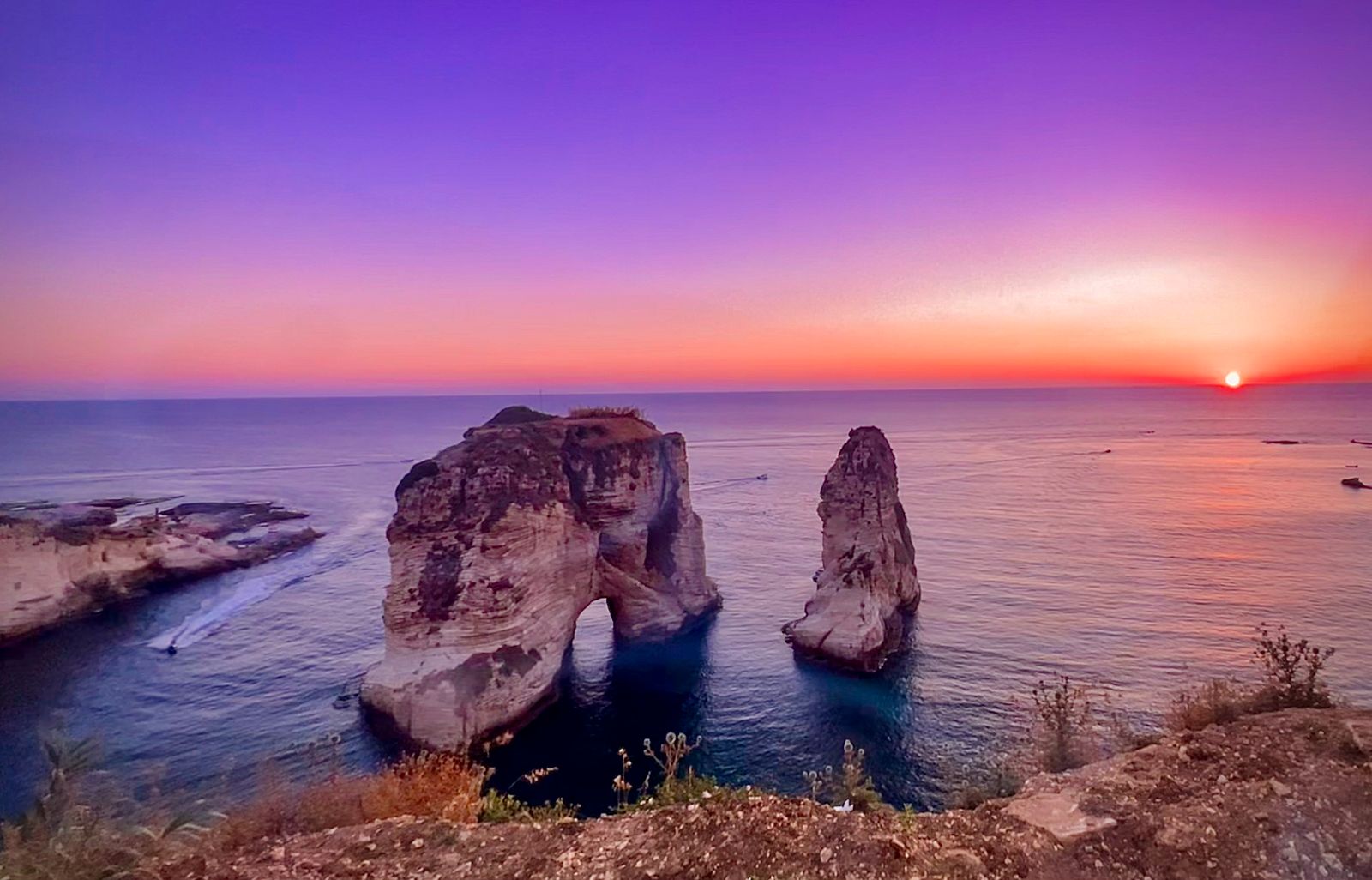
Raouché's sea stacks are on every postcard of Beirut. What almost no one photographs is that the same limestone keeps going underwater — arches, cuts, overhangs and passages worn into the rock along the city's coastline.
It is genuinely good diving, it is twenty minutes from the corniche, and it comes with one caveat worth putting near the top.
About the word "cave"
Most of what gets called a cave along this coast is not one.
An arch is not a cave. A swim-through where you can see the exit the whole way is not a cave. An overhang with daylight above you is not a cave.
Those are the majority of Beirut's rock features, and they are diveable by ordinary certified divers with good buoyancy.
With that said, the rest of this article is about the features that are open to normal divers, because there are a lot of them and they are underrated.
What the diving is like
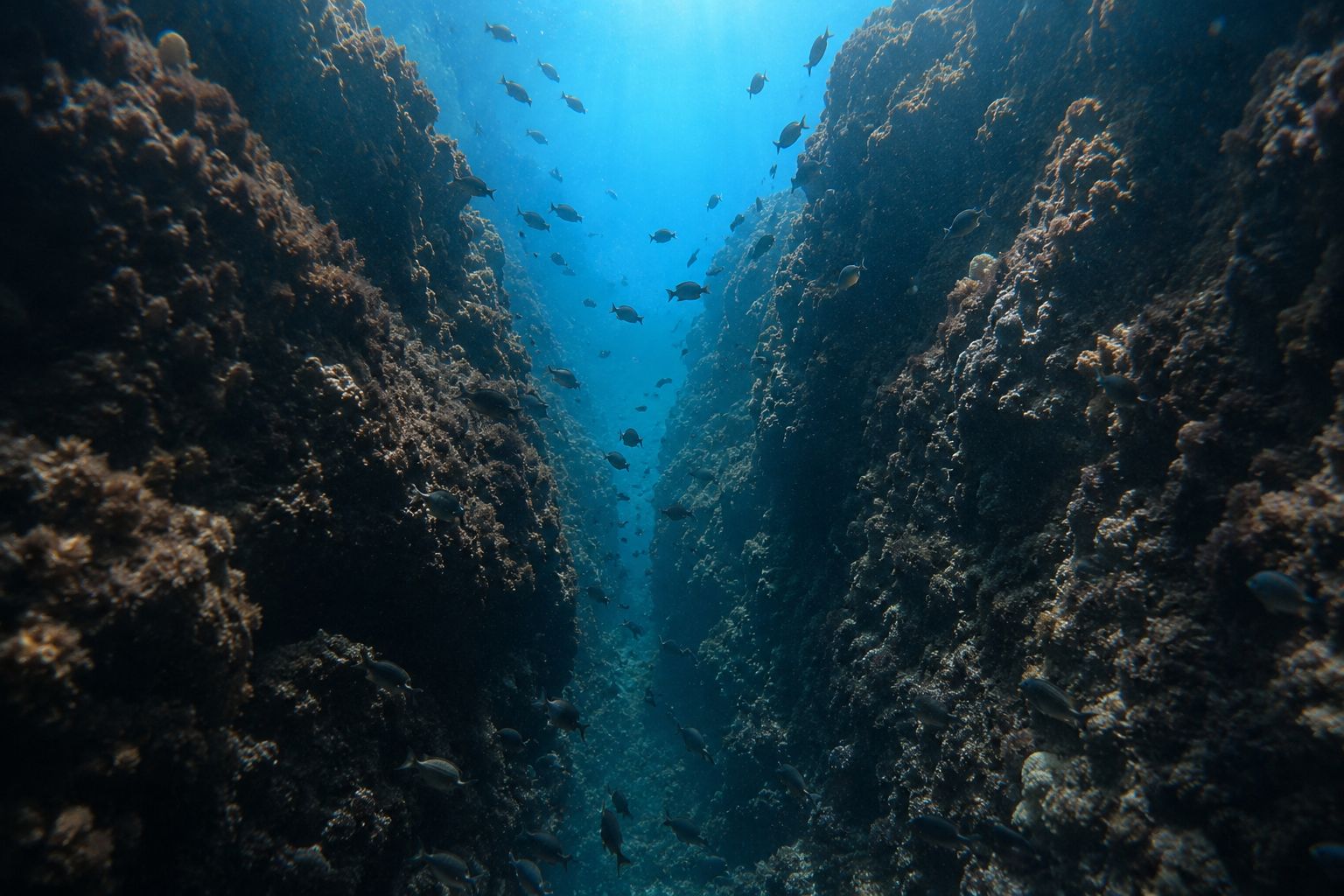
Beirut's underwater rock is limestone that has been worked on by the Mediterranean for a very long time. The result is structure: vertical faces, boulder fields, cuts running back into the rock, arches you can swim under, and the occasional short passage with light at both ends.
What makes it worth diving is not scale — the formations are modest by international standards — but light. Mediterranean water plus limestone plus midday sun produces the shafts and reflections that most divers came looking for in the first place. An arch here in good visibility at 11am is a genuinely beautiful thing.
Full species detail in what you'll actually see underwater in Lebanon.
Level and conditions
Conditions are the variable. This is a city coastline, and it responds to two things: swell and rain.
Swell makes rock diving uncomfortable and surge inside a cut is a real consideration — being pushed against limestone is how divers get cut up. Rain and run-off drop the visibility, sometimes for days.
On a settled day in autumn, after a dry spell, this is some of the most pleasant diving in the country. After a storm, it is not worth the boat ride.
Diving it well
Get your buoyancy right before you go into anything. The rule for any structure is: if you cannot hold your depth to within half a metre without thinking, stay outside it.
Carry a light. Daylight diving in shaded rock without a torch is monochrome. With one it is not.
Watch the surge inside cuts. Water moving through a narrow gap moves faster. Time your entry with the surge rather than fighting it.
Do not touch the walls. Partly for the encrusting life, partly because Mediterranean limestone and sea urchins are a combination nobody enjoys.
Where it fits in a Beirut dive day
Rock diving around Raouché and the Riviera stretch makes an excellent second dive — shallower, longer, and a good decompression profile after a deeper first dive at somewhere like Shark Point.
It is also where a great many Beirut divers did their training dives, which means it is where the local diving community's shared memory lives.
How the boat day works generally is in boat dives from Beirut, and the wider city picture is in scuba diving in Beirut.
If you are not certified yet
This is the sort of diving that makes people want to be. A supervised introductory dive can be run in the shallower parts of this coastline, and the Open Water course training dives frequently happen here.
For the full coastal list with depths and levels, see every dive site on the Lebanese coast.