There are not many capital cities where you can finish a meeting at nine, be on a boat at ten, and be looking at a moray eel by half past.
Beirut is one of them, and the number of people in this city who know it is remarkably small.
Why the city works as a dive base
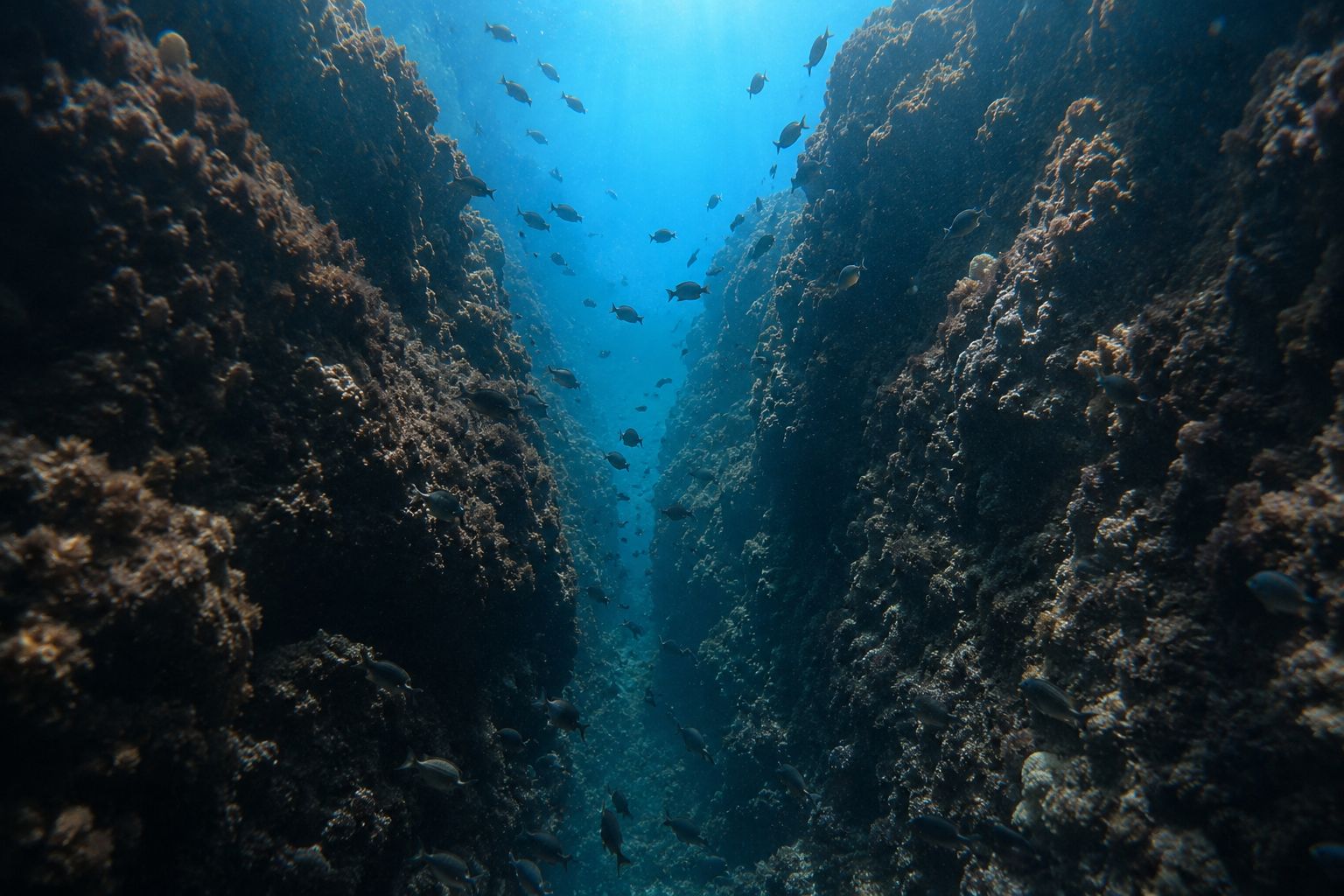
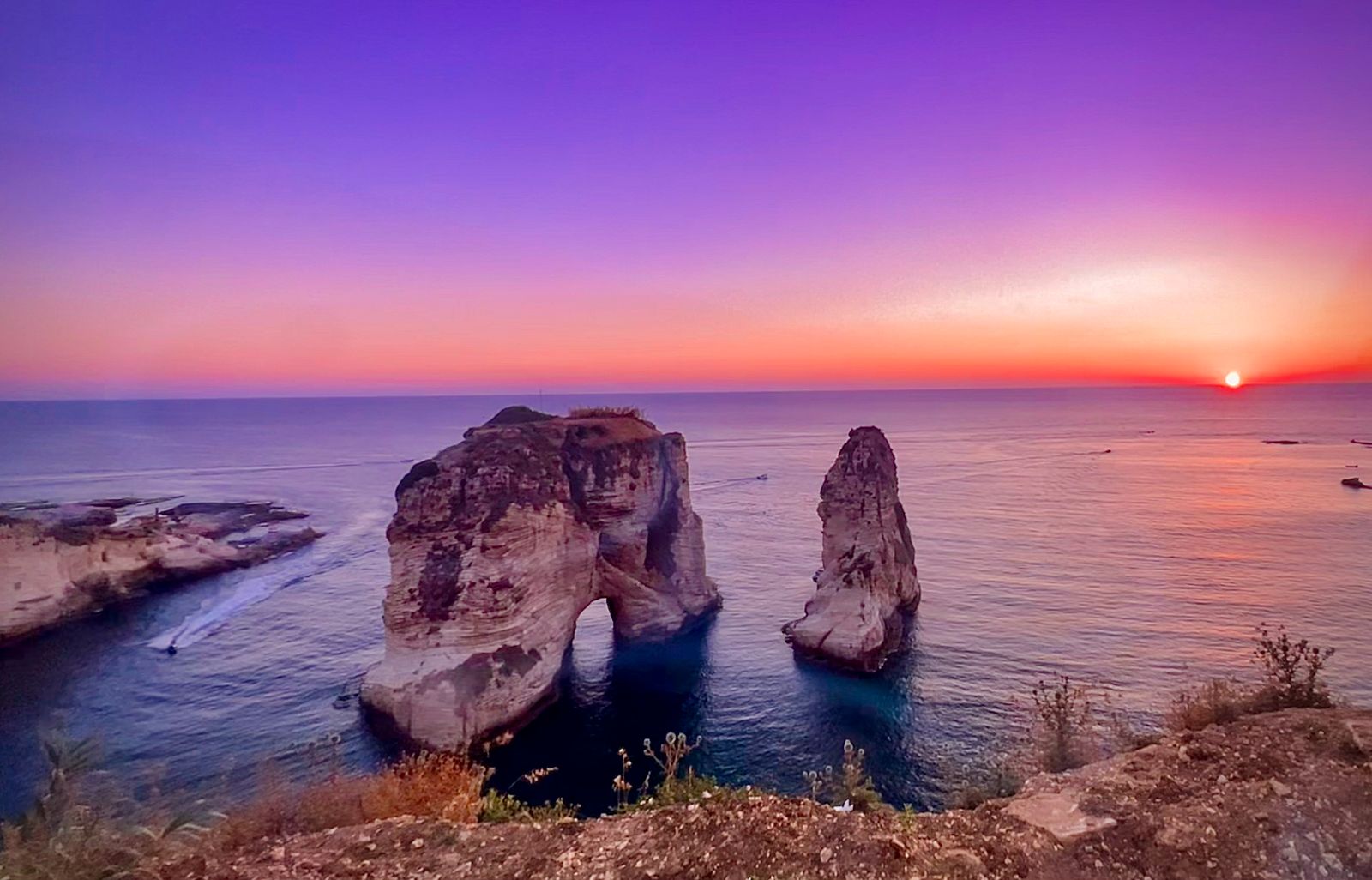
The coastline has real topography. Beirut sits on limestone, and the rock that makes Raouché famous above water continues below it — walls, arches, cuts and boulder fields. This is not a flat sand shoreline with a dive centre attached.
The sites are close. Boat rides to most sites are 10 to 25 minutes. Compared with destinations where an hour each way is normal, this changes what a dive day costs you in time.
It reaches both directions. Jounieh and its Alice B wreck are a short run north. The Souffleur submarine is offshore to the south. Batroun is an hour up the coast for a full day.
It is uncrowded. You will rarely share a site.
The sites
Raouché and the city coastline
Rock architecture — arches, cuts, overhangs and short swim-throughs, mostly in the shallow-to-moderate range. This is where most Beirut divers trained and where introductory dives and course work happen.
What makes it worth diving is light: limestone plus clear water plus a midday sun angle produces genuinely beautiful shafts through the arches.
Level: entry-level and up. Full write-up: the Riviera caves and Beirut's rock formations.
Shark Point
About 12 km south of Ras Beirut, roughly 34–38 metres, with current that can be significant. Rays, morays, and — reported in July and August — harmless smalltooth sand tiger sharks.
Level: advanced, deep-certified. Full write-up: Shark Point, Beirut.
The Souffleur
The French submarine torpedoed in June 1941, lying broken in two at 38–40 metres off Khaldé, south of the city. Lebanon's most significant divable wreck.
Level: advanced with deep training and current deep experience. Full write-up: the Souffleur.
Within reach for a day trip
Jounieh north, Batroun an hour further. Both worth building a day around.
The complete coastal list with depths and levels is in every dive site on the Lebanese coast.
How a Beirut dive day actually runs
Single dive, morning
| Time | What happens |
|---|---|
| 08:30 | Arrive, paperwork if it is your first time, kit up |
| 09:15 | Boat departs |
| 09:35 | On site, briefing, in the water |
| 10:20 | Back on the boat |
| 10:45 | Back at the centre |
| 11:30 | Gear rinsed, done |
About three hours, door to door. That is the number that makes Beirut unusual.
Two dives
Add the surface interval — typically an hour or more — plus the second dive and the run back. Five to six hours, finishing early afternoon.
The standard structure is the deeper site first, the shallower one second. That is both the correct decompression profile and, on this coast, the correct weather call — the sea tends to build through the day.
Full detail in boat dives from Beirut.
Where SEALS operates from
SEALS Diving Center is inside Mövenpick Hotel Beirut, on the Raouché seafront — which puts the centre directly on the stretch of coast the city's diving happens on.
Practical detail — parking, access, how to find the centre, what the day looks like from arrival — is in finding us: diving from Mövenpick Hotel Beirut.
Who dives in Beirut
People who live here. The largest group, and the one that benefits most from the short logistics. A dive before work is genuinely possible.
Lebanese visiting home. Summer is full of people back for a few weeks who want to do something other than the beach. Certifying inside a visit is very doable — here is how that works.
Travellers. Beirut is not on the international dive-travel circuit, which is exactly why the sites are empty.
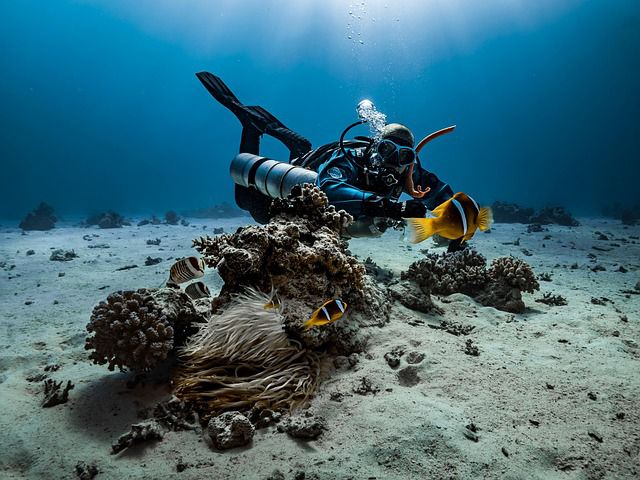
Complete beginners. A supervised first dive in the shallow water off this coast is one of the better things to do on a day in Beirut. What it involves.
Starting from nothing
- A supervised try-dive — one morning, no certification
- The Open Water course — three to four days, certification for life
- Dives — twenty or thirty, around Beirut and Jounieh
- Advanced training — which opens the wrecks
- The Souffleur, properly, with attention to spare
When to come
June through October is the reliable window. September and October are the best of it — warm water, settled sea, and the clearest visibility of the year after a long dry spell.
Winter diving happens and can be excellent on the right day, but it is weather-dependent and cancellations are common.
The short version
Beirut has a genuinely diveable coastline with real structure, short boat rides, two significant wrecks within reach, and almost nobody diving it. The limitation is run-off after rain. Time it for a dry spell and it is one of the more surprising things this city has.