The advanced course is structurally different from your entry-level certification. It is not a syllabus so much as five dives you choose, each introducing a different area of diving, under instructor supervision.
Which five you pick matters more than most people are told.
Why it matters in Lebanon specifically
Entry-level certification typically carries an 18-metre depth limit.
Now look at where Lebanon's diving actually is:
| Site | Depth |
|---|---|
| Alice B | 27–37 m |
| Shark Point | 34–38 m |
| Souffleur submarine | 38–40 m |
| Batroun cement wreck | 35–40 m |
Every one of those is outside entry-level limits. In some destinations the advanced course is a nice-to-have. Here it is the difference between diving the reefs and diving the country.
The five dives
Most agencies require two specific dives and let you choose three.
Near-compulsory: Deep
Usually required, and you would want it regardless.
What it actually teaches is not "how to go deeper." It is what happens to you at depth — gas consumption rising sharply, no-decompression time shrinking, colour disappearing, and narcosis, which most divers experience as a subtle narrowing of attention rather than anything dramatic.
The most valuable part of a deep training dive is usually a simple exercise: your instructor gives you a task at depth that you completed easily on the surface, and you find out how you personally respond. That is worth knowing before you are on a wreck at 38 metres.
Near-compulsory: Navigation
Also usually required, and the most quietly useful dive on the list.
Compass work, natural navigation, distance estimation. It sounds dull and it changes your diving permanently — because a diver who knows where they are relative to the boat behaves differently from one who does not, particularly on a site with current.
The three you choose
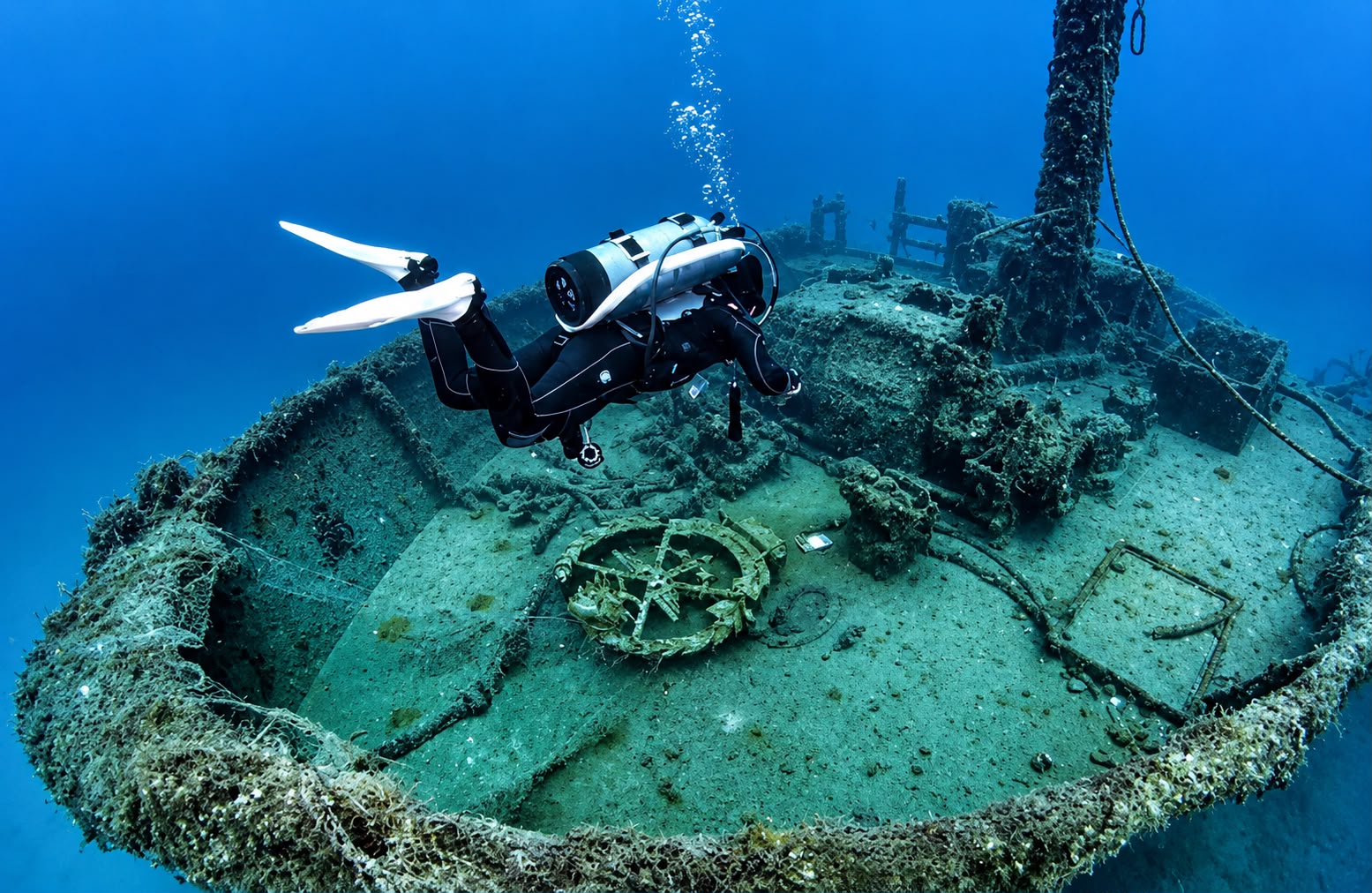
Wreck. In Lebanon, the obvious pick. An introduction to wreck diving technique and hazards — with the important caveat that an adventure wreck dive is not a penetration qualification. The distinction.
Peak performance buoyancy. The least exciting option and arguably the best one. Buoyancy is every second of every dive for the rest of your life, and most divers never get formal instruction in it after entry level.
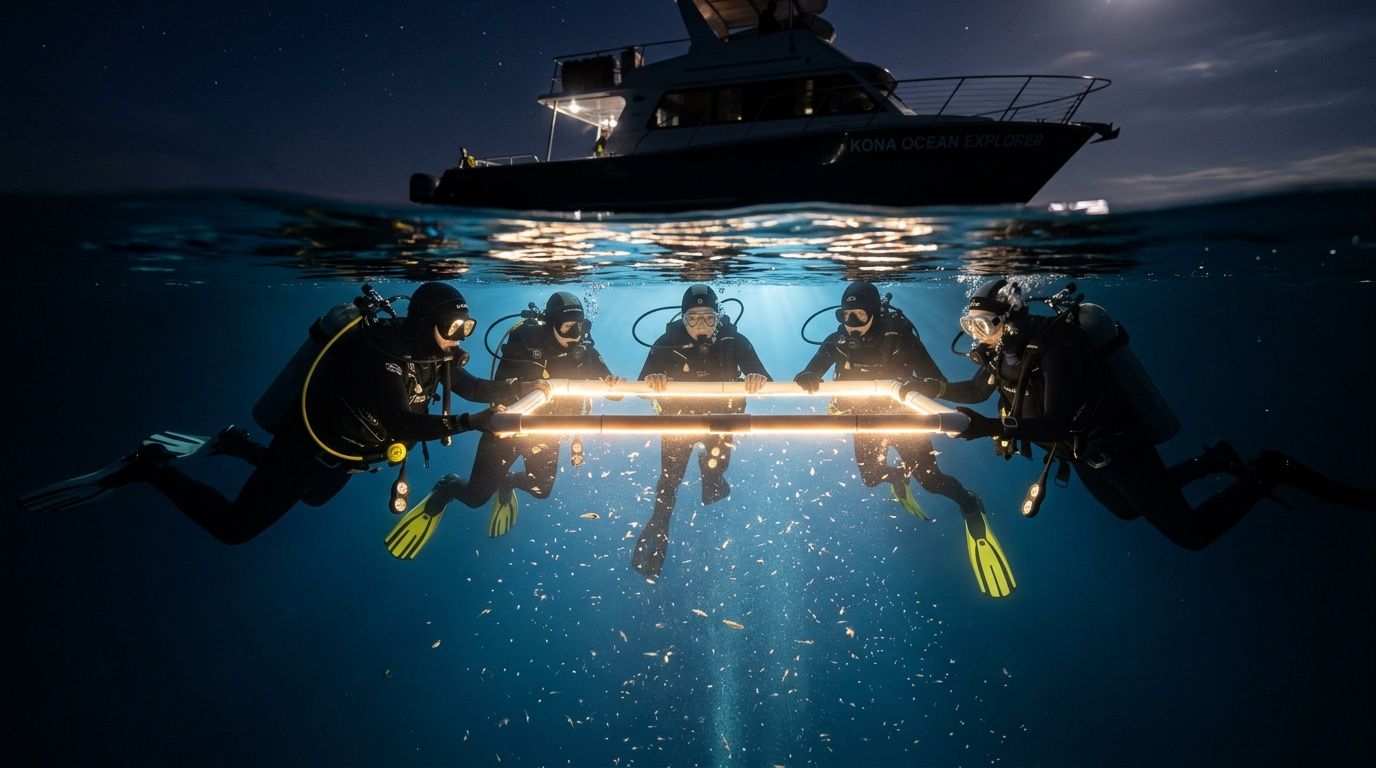
Night. Genuinely transformative. The same site at night is a different place — octopus out hunting, crustaceans everywhere, fish asleep and approachable. Worth doing once even if you never repeat it.
Enriched air nitrox. Where the agency allows it to count, this is efficient — you get an advanced dive and a genuinely useful certification. Why nitrox matters here.
Search and recovery, drift, photography, fish identification. Situational. Pick these only if you can name a dive you want to do that needs them.
When to do it
The formal prerequisite is usually only an entry-level certification. That does not mean the week after is the right time.
The honest recommendation: twenty or so dives first.
Here is why. On a deep training dive, an instructor is assessing how you handle depth. A diver who is still consciously managing their buoyancy has no spare attention, and the deep dive becomes an exercise in survival rather than learning. A diver with twenty dives behind them arrives with capacity to spare, and actually absorbs it.
The course costs the same either way. What differs is what you take from it.
What it does not give you
Worth stating plainly.
It does not make you a wreck penetration diver. An adventure wreck dive is an introduction, not a certification to enter overhead environments.
It does not make you a technical diver. That progression is much longer.
It does not replace experience. A newly advanced diver with 15 logged dives is not ready for the Souffleur, and a good operator will say so.
After advanced
The natural next steps in Lebanon:
- Nitrox if you did not take it as an adventure dive — the highest-value short course on this coast.
- More dives. Another thirty, at the depths you have just unlocked, before adding anything else.
- Rescue, which most experienced divers name as the course that changed them most.
The full ladder is in every diving course we run.
Practical notes for Lebanon
Season. Advanced dives are deeper and often boat-based, so settled sea matters more than for entry-level training. June through October is the reliable window, with September and October best. Month-by-month.
Thermal. Deep dives are colder than surface temperature suggests. Bring or rent more suit than you think. Wetsuit guidance.
A computer. If you do not own one, this is the point at which it becomes the sensible purchase. What actually matters in one.