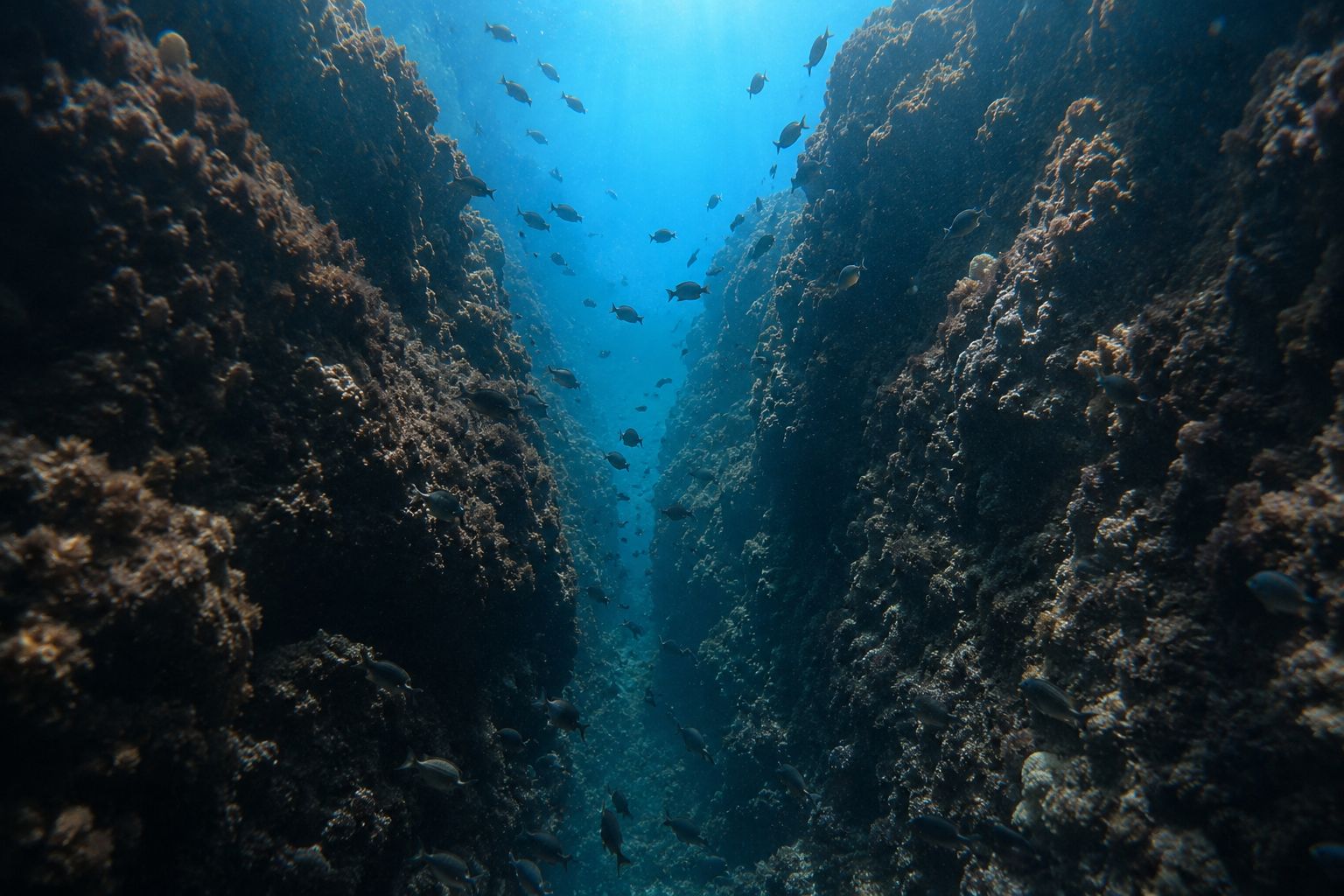
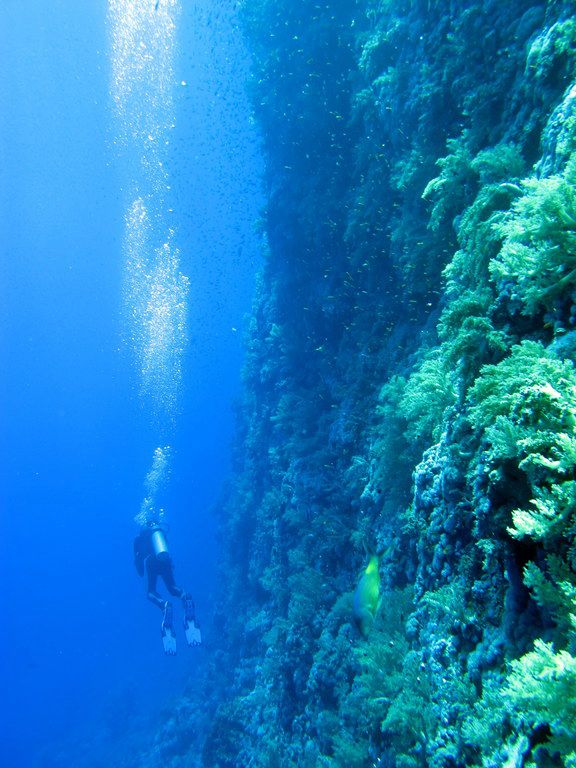
There is a point about forty minutes north of Beirut where the water stops being city water. Less development on the shoreline, fewer river mouths dumping after rain, and — on a good day in autumn — the kind of visibility that makes people who only dive around the capital slightly annoyed.
Batroun is where Lebanese divers go when they want to see something.
Why the water is clearer here
Not mystery, geography. Beirut's coastline collects run-off from a dense, built-up catchment, and after rain that run-off is visible underwater for days. The northern coast has less of it, and what it has is spread over a longer stretch of shoreline.
The practical effect: on the same weekend, Batroun can be diveable and clear while sites near the capital are milky. That gap widens after rain and closes in the dry months.
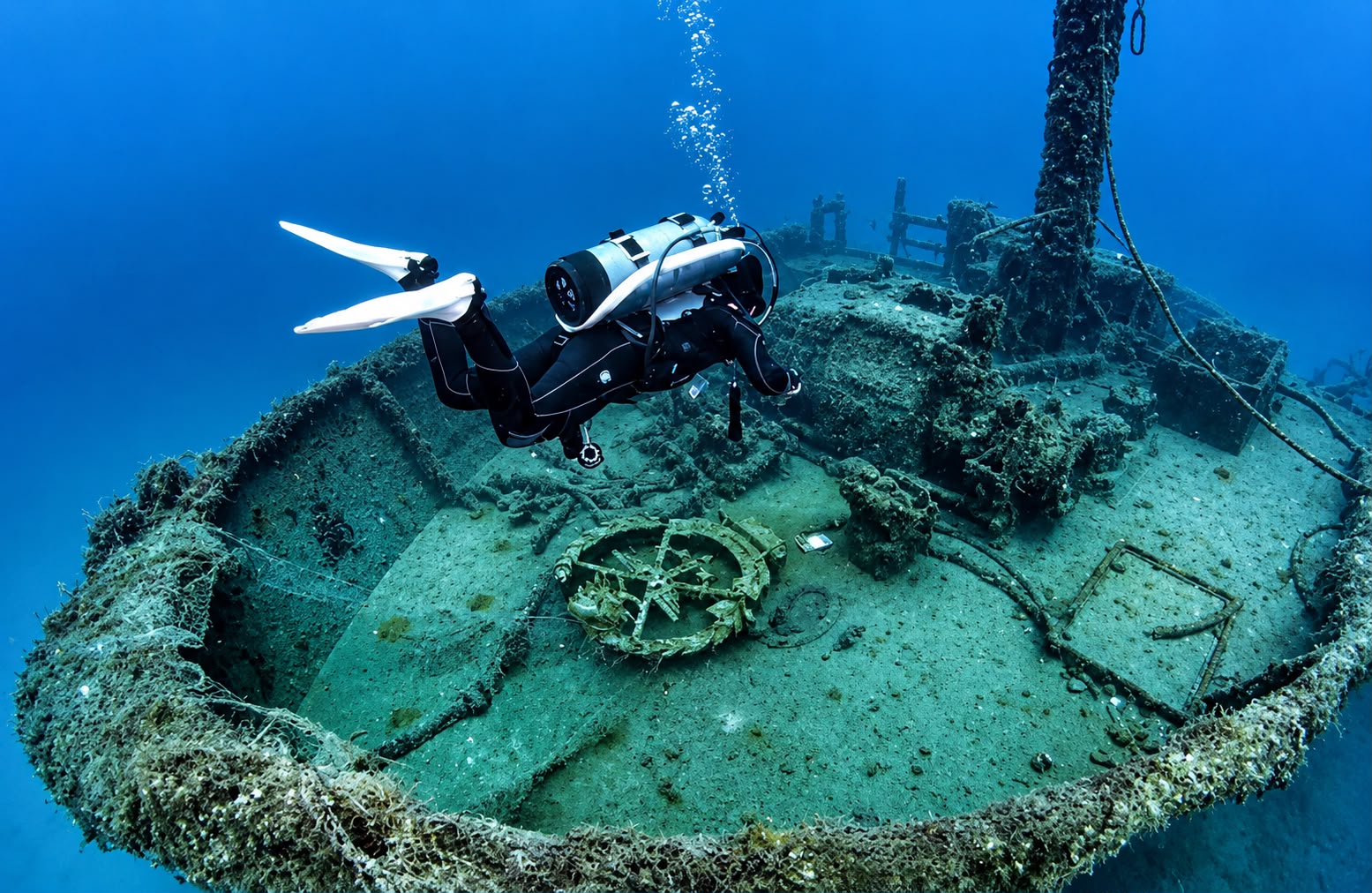
The cement freighter (Captain Michel)
The site Batroun is known for.
| Type | Cargo freighter |
| Depth | Seabed around 40 m, shallower structure around 35 m |
| Access | Boat |
| Level | Advanced, deep-certified, current deep experience |
| Cargo | Cement, still recognisable on the wreck |
The thing that makes this wreck memorable is the cargo. She went down carrying cement, and the cement is still there — bags and set material that make the wreck read as a working ship carrying something, rather than as an anonymous hull.
Level, honestly: 35 to 40 metres is a deep dive. Your no-decompression time is short, your gas consumption is roughly five times what it is at the surface, and narcosis is a factor for most divers at this depth. This is not a site to dive on the strength of an advanced card and no recent deep experience.
Penetration
The wreck has openings and divers do penetrate it. That requires wreck-penetration certification, continuous guideline, redundant lights and redundant gas — the full overhead-environment discipline. Without those, dive the exterior. There is plenty of it.
The caverns
North of the cement wreck the coast has genuine overhead environments, which is unusual for Lebanon and one of the reasons the north is worth the drive.
St Catherine cavern. A small cavern with interesting structure. Requires overhead-environment certification.
The Air Cave. A shallower passage that ascends towards the surface. Calmer, and often described as the more serene of the two.
Shallow diving on the northern coast
Not everything up here is deep. The northern coastline has rock, reef and shallow structure that suit newly certified divers and make a good second dive after the wreck.
This matters for planning a day: a deep wreck first, a long shallow dive second, is a much better profile than two deep dives, and it is also a much better day.
Planning a Batroun day from Beirut
Distance. Roughly 50 km, around an hour depending on traffic.
Structure of the day. Most operations run it as a full day — drive up, two dives with a surface interval, food, drive back. Trying to do it as a morning trip generally means rushing the surface interval, which is the wrong thing to rush.
Timing. Late summer and autumn are the sweet spot. September and October in particular tend to combine warm water, settled sea and the clearest visibility of the year.
Thermal. The northern water is not warmer than Beirut. At 35–40 m on a wreck, most divers want more suit than the surface temperature suggests, especially with a second dive to follow. See wetsuit guidance.
Nitrox up here specifically
Batroun is the strongest argument in Lebanon for holding an enriched air certification. A 35–40 metre wreck followed by a second dive is exactly the profile where nitrox changes your day — not by letting you go deeper, but by leaving you with meaningfully less nitrogen loading before dive two.
Where it fits on the coast
Batroun is the clear-water end of Lebanese diving. South of it, Jounieh has the accessible Alice B, and Beirut has the city sites and the deeper Souffleur offshore. North of Batroun, off Tripoli, sits HMS Victoria at 140 metres — visible on no dive plan anywhere.
The full coastal list is in every dive site on the Lebanese coast.