There is a version of the summer visit that repeats every year. Family, the same restaurants, the same beach clubs, the mountains for a weekend, and then the flight back.
Somewhere in the middle of that there are three or four spare days.
Why this specifically
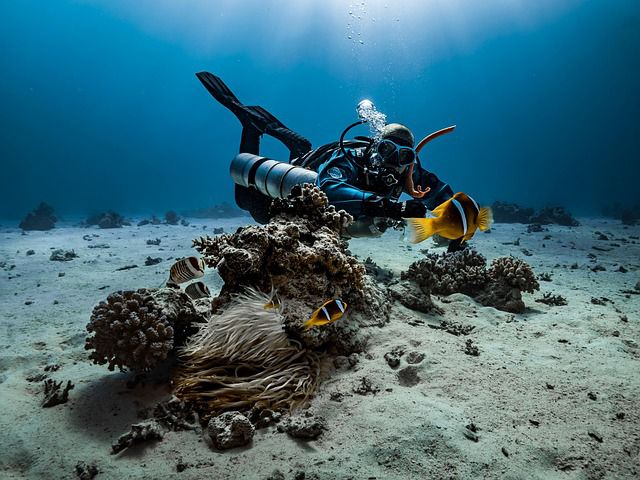
A diving certification is one of the few things you can acquire in a fortnight that keeps working afterwards. It does not expire, it is recognised worldwide, and it converts every coastal holiday for the rest of your life into a different kind of holiday.
It is also, for now, meaningfully cheaper here than in Western Europe or North America — which is why a fair number of the people in any given Lebanese course are back for the summer.
And it is genuinely a Lebanese thing to do. This coast has a Second World War submarine, a coastline of wrecks and rock architecture almost nobody dives. Doing it here rather than on a package holiday somewhere else has a point to it.
The realistic schedule
| Do this | |
|---|---|
| Before you fly | Complete the online theory. Sort out any medical questions |
| Days 1–2 | Confined water skills + first open water dives |
| Day 3 | Remaining open water dives — certified |
| Spare day | Held back for weather |
| Rest of the trip | Fun dives, which is the actual point |
| Last 24h+ | No diving before the flight |
Three days of in-water time. Inside a two- or three-week visit, that is not much.
Before you fly
1. Book the dates now, not on arrival. August is peak season for everything on this coast. Centres fill.
2. Do the academic portion. Ask the centre for the online access as soon as you book.
3. Deal with any medical question. If anything on the questionnaire applies to you — asthma, heart condition, epilepsy, recent surgery, ear problems, pregnancy — get assessed at home, before you travel, by a physician trained in diving medicine. Arriving with an unresolved medical question and a fixed departure date is the worst possible position. What's on the questionnaire.
4. Buy a mask. The one piece worth owning, and it fits in hand luggage. How to choose one.
5. Check the flight rule. There is a recommended interval between your last dive and flying. Know it before you build the schedule, not after.
The flight rule, properly
This catches people every year, so it gets its own section.
What to do with the rest of the trip
The certification is the beginning, not the achievement. What makes it worth having is the diving you do afterwards.
With a few days left and a fresh certification, in order of how much you will enjoy them:
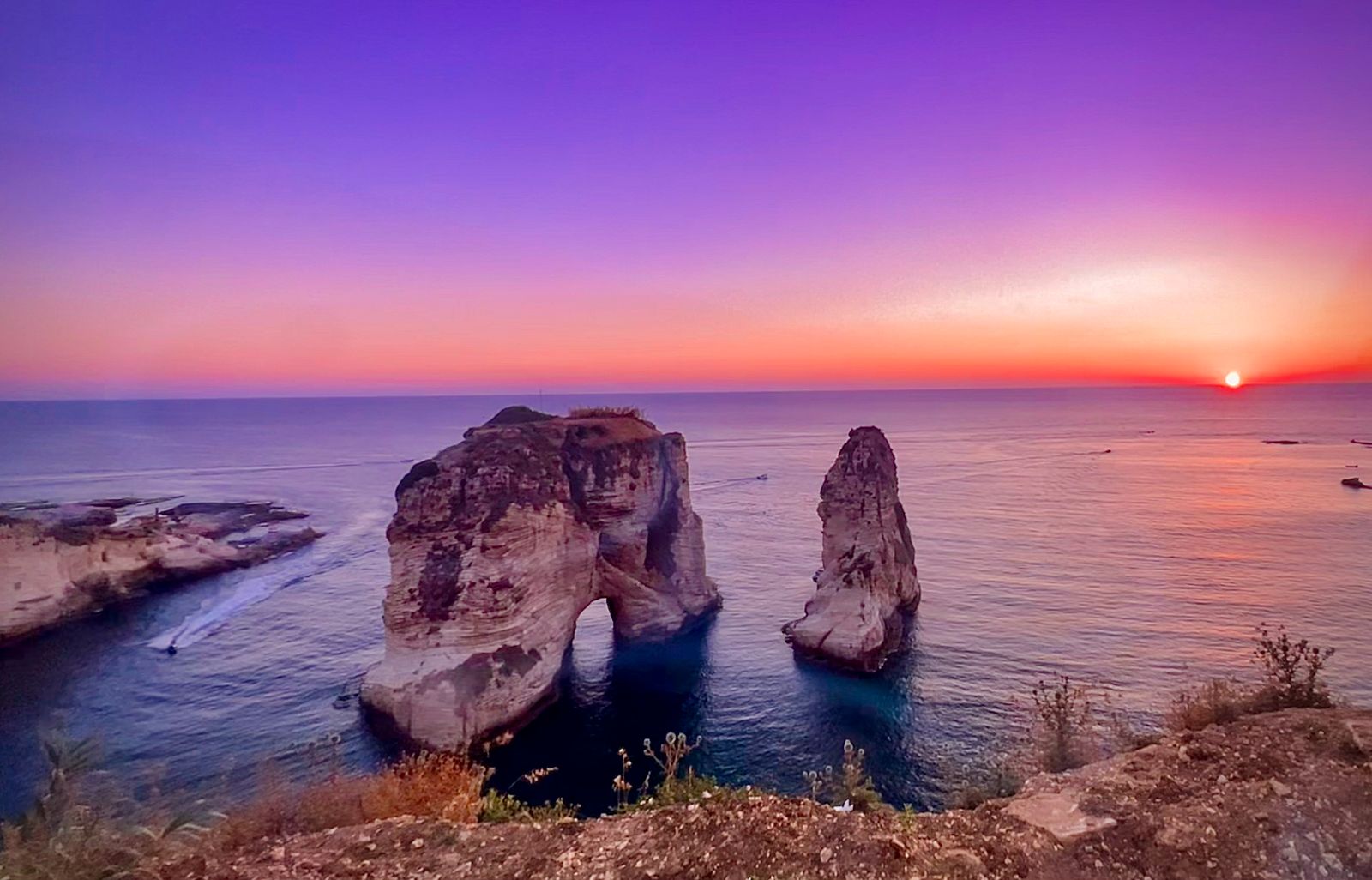
The Raouché rock formations — arches and cuts in the limestone, twenty minutes from the city. Entry-level friendly and genuinely beautiful in late-morning light.
Jounieh — sheltered bay diving, and the Alice B wreck once you have the level for it.
Batroun — a day trip north to the clearest water in the country.
What you are not ready for on this trip: the Souffleur at 38–40 metres and Shark Point at 34–38. Those need advanced training and real experience. They will be here next summer.
Doing it with family
This works better than most holiday activities because everyone can participate at their own level.
- Someone certifies
- Someone else does a supervised try-dive — one morning, no commitment
- Children can do junior programmes where age and readiness allow. What's realistic
- Everyone else snorkels
And it is a genuinely different way to see the country you are visiting.
Timing your visit
August is warmest — sea surface temperature near 29 °C — and busiest.
September and October are better diving: still warm, sea settled, and the clearest visibility of the year after a long dry spell. If your dates are flexible, come at the end of summer.
June and July are excellent and slightly quieter than August.
Cost
Generally lower than the equivalent course in Western Europe. What matters more than the headline number is what is included — instruction, materials, certification fee, equipment, air, boat access.
Ask for an all-in written quote. The full checklist is in what diving actually costs in Lebanon.
Booking it
Message a centre with three things: your dates, whether you want the full certification or a try-dive, and your flight date.
The last one matters more than people realise. A centre that knows your flight will build the schedule backwards from it — and will tell you which day has to be your last in the water.
What the course itself involves, day by day, is in the Open Water Diver course in Lebanon.