Lebanon is a strange place to dive, in the best sense. The country has about 220 kilometres of coastline — you can drive it end to end in an afternoon — and packed into it is a density of shipwrecks that countries ten times the size would advertise relentlessly. A Second World War French submarine. A Victorian battleship sitting bolt upright on the seabed. Cargo ships put down deliberately as artificial reefs. Cold-war-era freighters. And almost nobody outside Lebanon knows about any of it.
This guide is the honest version: what the diving is actually like, what it costs, when to come, and how a person with no experience gets from curious to certified.
What diving in Lebanon is actually like
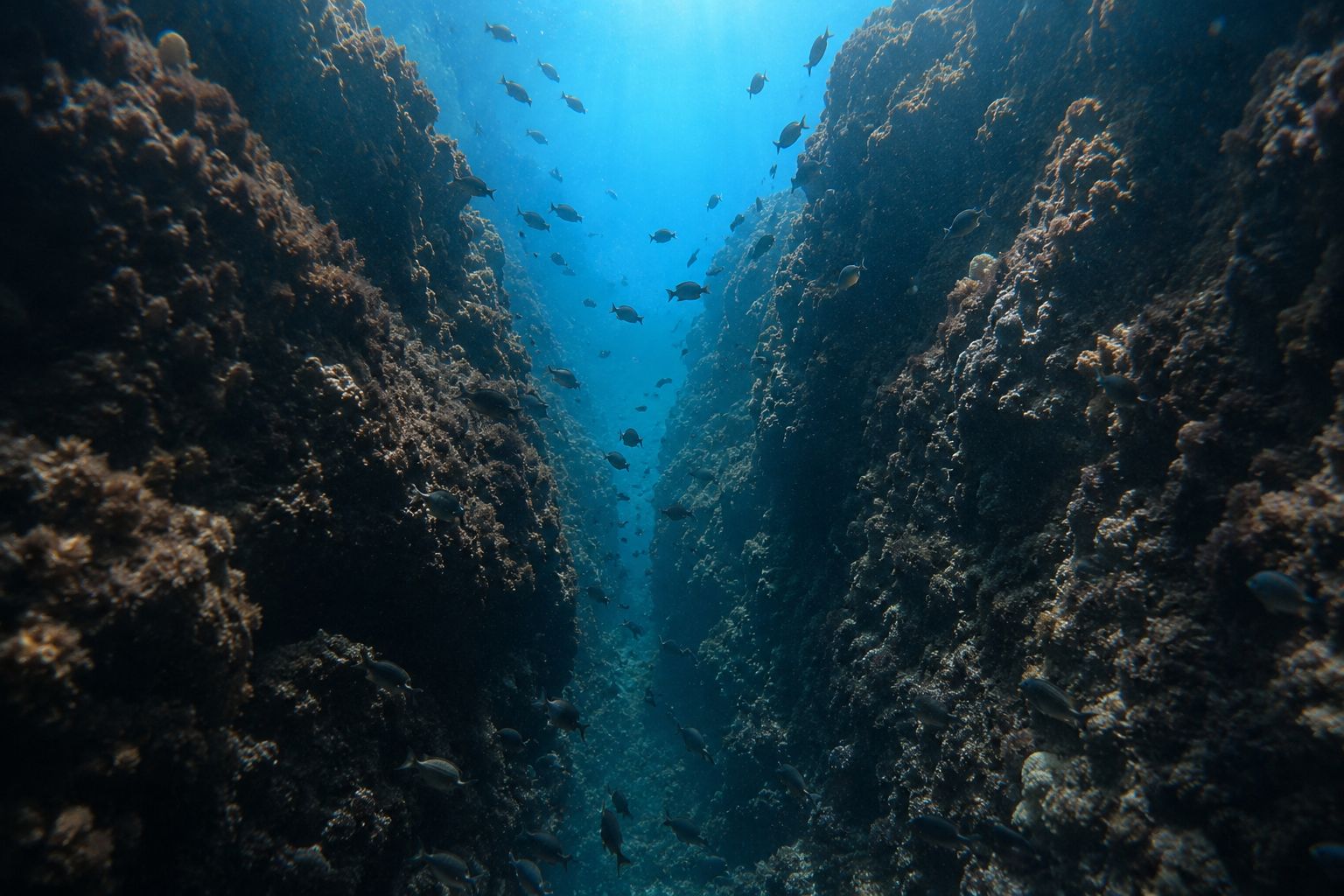
The first thing to adjust is your expectation of colour. If your reference point is the Red Sea or Southeast Asia, the Eastern Mediterranean will look austere at first — less coral, fewer large schooling fish, more rock, sand and structure. Divers who fall in love with it usually do so for three reasons.
The water is warm and long-seasoned. The Levantine basin is the warmest corner of the Mediterranean. Summer diving here is genuinely comfortable in thin neoprene, and the season for pleasant diving is long by European standards.
The wrecks are unusually good. Not one flagship wreck with everything else an afterthought — a whole coastline of them, at a spread of depths and difficulty levels, several of them historically significant.
It is quiet. You will rarely share a site with another group. On a weekday you are often the only boat.
Where you dive
Lebanon's diving splits into a few natural regions, and they are genuinely different from one another.
| Region | What it's known for | Typical profile |
|---|---|---|
| Beirut & Raouché | Rock formations, walls, canyon topography, easy access from the city | Shore and short boat rides |
| Jounieh Bay | The Alice B wreck, sheltered water | Short boat ride |
| Khaldé, south of Beirut | The Souffleur submarine | Boat, deeper |
| Batroun & the north | The clearest water in the country, cement and cargo wrecks | Boat |
| Off Tripoli | HMS Victoria — the vertical wreck | Boat, technical depths |
We have written a full site-by-site breakdown with depths and required levels in every dive site on the Lebanese coast, and a dedicated guide to wreck diving in Lebanon if wrecks are the reason you are reading this.
What you'll see underwater
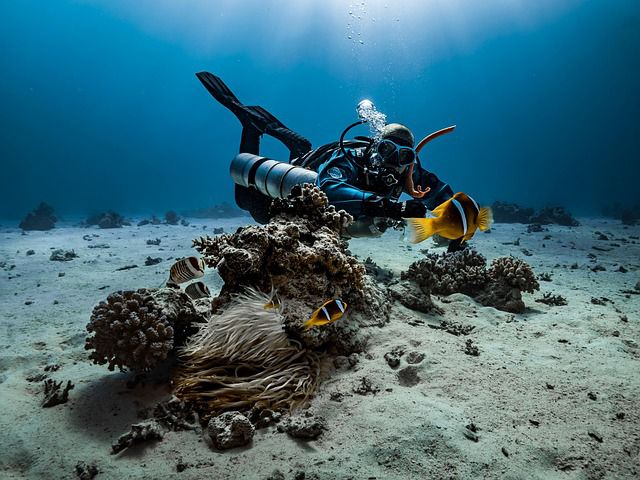
The Eastern Mediterranean is a real ecosystem, not an empty one — it simply rewards attention rather than announcing itself. Groupers hold territory around wreck structure. Moray eels sit in holes in the rock. Octopus are common and, once you learn to spot them, everywhere. Bream, damselfish and wrasse move over the reef in numbers. Nudibranchs and small crustaceans reward divers who slow down.
What you actually encounter depends heavily on site, season and depth, and we go through it properly in what you'll actually see underwater in Lebanon.
Learning to dive in Lebanon
There are three realistic starting points, and they suit very different people.
1. A single supervised dive
SSI and NAUI both offer a programme that lets someone with no training breathe underwater under the direct, continuous supervision of a professional, within shallow limits. It takes part of a morning. It is not a certification and it does not let you dive independently afterwards — it is a taste, and an honest one. Most people who go on to certify started here. See try scuba in Beirut for what the day actually involves.
2. Entry-level certification
The Open Water Diver certification (SSI, NAUI and other recognised agencies all offer an equivalent) is the real qualification. It involves theory, confined-water skill practice, and a series of open-water training dives. Once certified, you can rent equipment and dive with a buddy, worldwide, for life. Details, schedule and what is included are in the Open Water course guide.
3. Continuing education
After entry level, the path continues — advanced training, specialties like nitrox and deep diving, rescue training, and eventually professional levels. Because several of Lebanon's best wrecks sit below recreational limits, divers here often continue further than they expected to. Our full breakdown is in every diving course we run.
Which agency? SSI, NAUI, PADI
All three are internationally recognised and all three produce competent divers. They are not identical, though, and dive centres that tell you "they're all the same" are simplifying. They differ in how course materials are delivered, in some standards details, in how flexible the training sequence is, and in cost structure. Certifications from all of them are accepted by dive operators worldwide.
We compare them properly — including what actually matters when choosing — in SSI vs PADI vs NAUI. SEALS is an SSI and NAUI training centre.
What it costs
Diving in Lebanon is, for now, meaningfully cheaper than the same training in Western Europe. Prices move, and any article quoting exact figures goes stale fast, so we keep a separate, dated breakdown in what diving actually costs in Lebanon rather than burying numbers here.
What is worth understanding before you ask for a price is what a quote should include: instruction, agency materials and digital certification fee, equipment use during training, air fills, and boat access where the training dives need a boat. A price that looks unusually low is often excluding one of those.
When to come
Lebanon has usable diving year-round, but the experience changes with the season — water temperature, visibility, sea state and how many days get blown out all vary. Late summer and autumn are the sweet spot for most visitors. Month-by-month water temperature and visibility are in when to dive in Lebanon.
Safety, health and honesty
Recreational scuba diving conducted within training limits, with maintained equipment and proper supervision, has a strong safety record. That record depends on the diver actually staying within those limits.
A few things are worth saying plainly:
- Some medical conditions genuinely matter. Conditions affecting the lungs, ears, sinuses, heart and certain neurological conditions can affect fitness to dive. This is not a formality. If you have a relevant condition or are unsure, get assessed by a physician trained in diving medicine before booking — not by a general practitioner unfamiliar with diving, and certainly not by a dive centre.
- Depth limits are not suggestions. Every certification level carries a depth limit set by the training agency, and the limits exist because the risks change with depth.
- Ask your dive centre direct questions. How old is the rental gear? When were the regulators last serviced? What is the emergency plan and where is the nearest recompression facility? A professional operation will answer without hesitating.
We answer the questions people actually ask — glasses, ear problems, asthma, age — in the questions people ask before booking, and address nerves honestly in is diving safe?.
Diving from Beirut specifically
Beirut is unusual in that you can be in a meeting in the morning and on a dive site twenty minutes offshore in the afternoon. The city's coastline has real topography — walls, canyons and rock formations around Raouché — and sits within easy reach of both Jounieh to the north and the deeper wrecks to the south.
SEALS operates from inside the Mövenpick Hotel Beirut on the Raouché seafront. What that means for a visitor's day — where to park, what time boats leave, how a dive day runs — is in scuba diving in Beirut.
Starting, practically
If you have never breathed underwater, book a single supervised dive first. If you already know you want the certification, book the Open Water course and give yourself a spare day. If you are already certified and just want to dive, tell a centre your certification level and number of logged dives, and ask what they would put you on this week.
That last question is a good test of a dive centre, incidentally. A good one will match the site to you. A careless one will put everyone on the same dive.